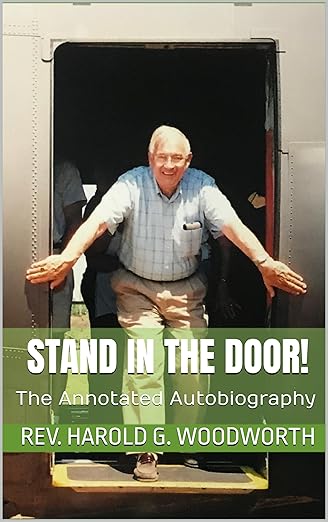
The annotated autobiography of Harold G. Woodworth (1933-2021) originally prepared for the Concordia Historical Institute in 1985. The original text has been annotated with photographs and illustrations. Lutheran Church Missouri Synod Rev. Harold G. Woodworth, D. Min,. known to many as ‘Padre,’ had a wonderful life in service of Christ. Truly a builder of congregational communities, his pastoral ministry ranged from the Deep South during the racial tension of the 1960s, to chaplainship in Vietnam.

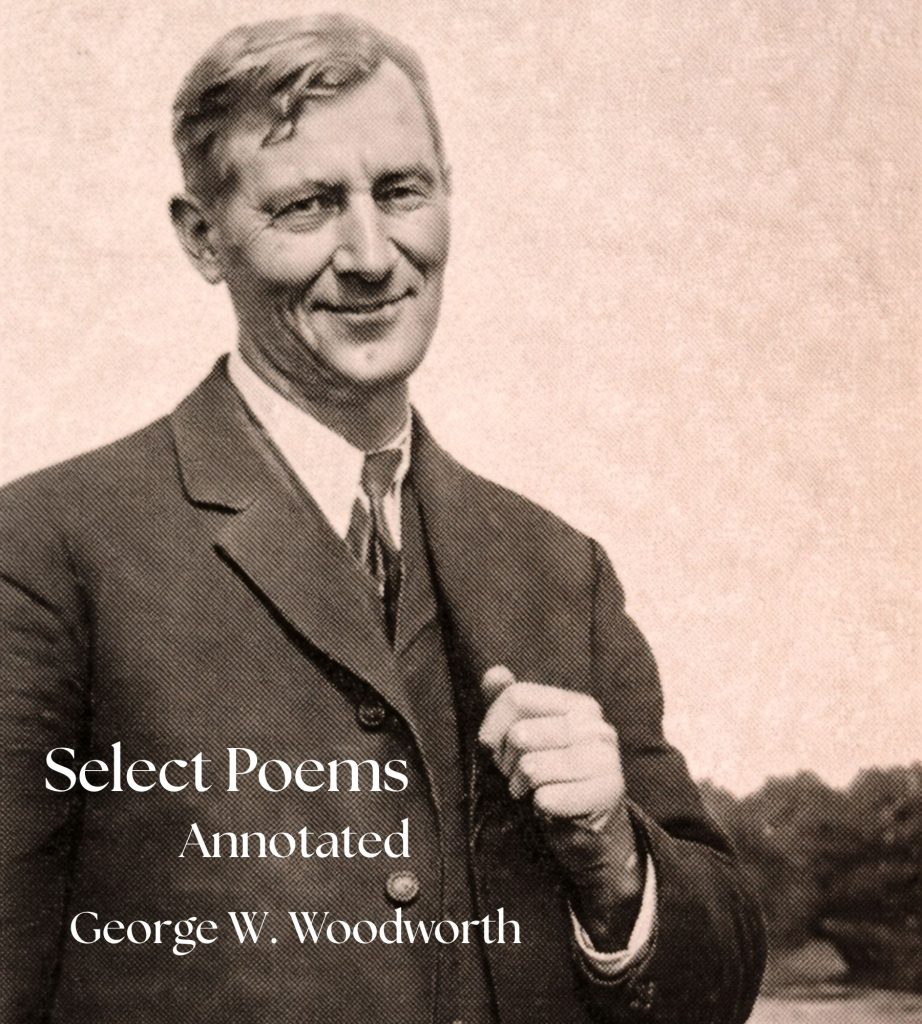
George W. Woodworth (April 29, 1863 – December 13, 1944) was a Wisconsin farmer and poet whose life and work were closely tied to the Woodworth family farm in the Mequon–Cedarburg area of Ozaukee County. Raised in a rural setting, he spent his adult life engaged in agriculture while writing poetry that reflected everyday labor, faith, community life, and the social concerns of his era. His poems, many dated between 1909 and 1920, appeared in local publications and were later collected in Select Poems. Edited and annotated by his great grandson, Mark G. Woodworth.

HE COGNITIVE EPOCH How Artificial Intelligence Changes Everything

In the autumn of 2026, something happens in Des Plaines, Illinois. What leads there — and what comes after — is the story of our time.

The Cognitive Epoch moves between the front lines of a transformation already underway: a Ukrainian analyst watching AI-generated disinformation spread faster than any human could author it; a Brussels policy architect racing regulation against technologies that outpace her drafting speed; an American worker rebuilding an identity in a labor market that no longer needs what he spent a lifetime learning to do.

Weaving reported narrative with rigorous analysis, this book maps the full terrain of what artificial intelligence is doing — to how wars are fought and elections are won, to how we fall in love and grieve our dead, to how children learn to think and adults find reasons to get up. It is concentrating power at a speed that democratic institutions were not designed to absorb, while simultaneously offering tools that, in the right hands, could make those institutions stronger than they have ever been.

The Cognitive Epoch does not promise that we will get this right. It takes seriously the possibility that we won’t. But it insists that the difference between those two outcomes is not fate — it is architecture: the choices, institutions, and individual wagers that either rise to meet this moment or quietly surrender it.

For readers of Power and Progress, The Age of Surveillance Capitalism, and The Precipice.

You’re not thinking for yourself. And you don’t know it.

Every day, a machine you cannot see is shaping what you believe, who you trust, and what you’re willing to do about it. It operates through your news feed, your social circle, your workplace, and your own psychology. It doesn’t need a conspiracy. It doesn’t need a villain. It just needs you—angry, certain, and never asking why.

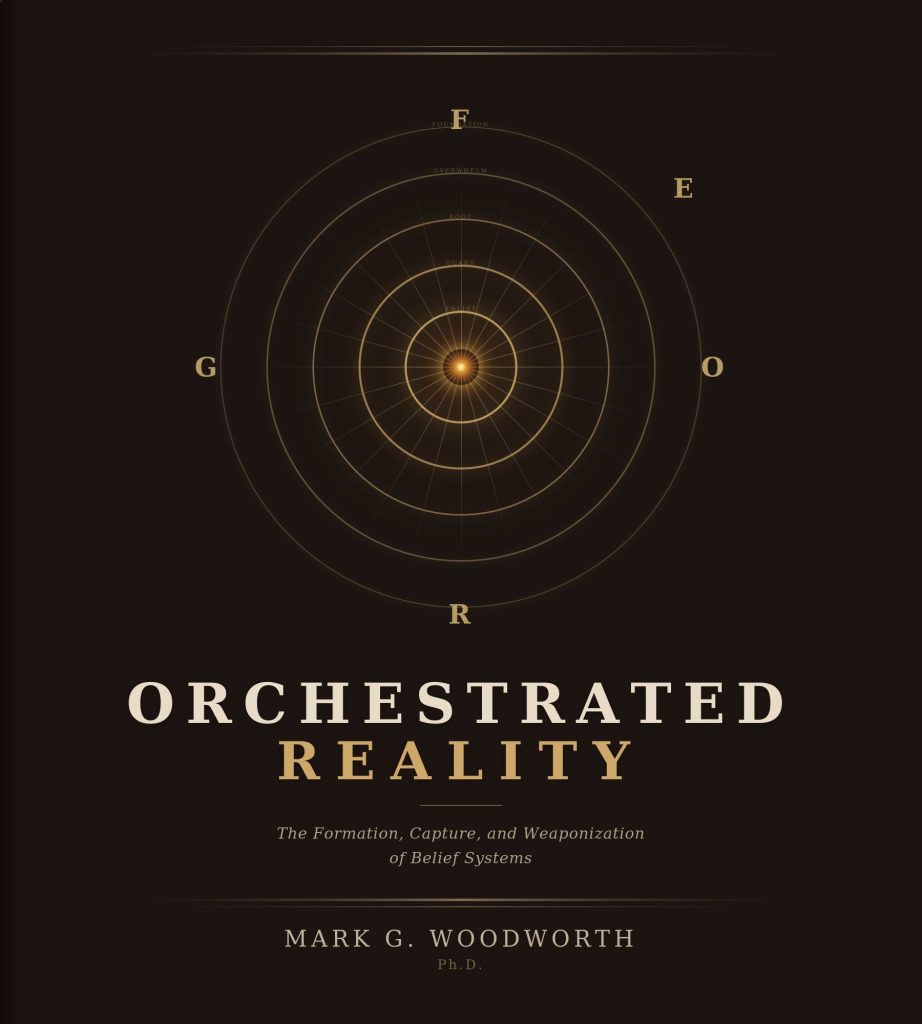
Orchestrated Reality reveals the machine.

Drawing on seven academic disciplines—from cognitive psychology and propaganda theory to fifth-generation warfare—this book introduces the FORGE model: a five-stage framework that maps, with uncomfortable precision, how open-minded citizens are transformed into weaponized believers. Foundation. Overwhelm. Root. Guard. Enlist. Five stages. Seven mechanisms. Three feedback loops. One process that works identically on the left and the right—because it doesn’t care about your politics. It cares about your attention.

Through nine deeply researched case studies—from Trump Derangement Syndrome to Black Lives Matter, from COVID-19 information control to the Censorship-Industrial Complex, from the Russia collusion narrative to the “woke” revolution—the FORGE model is applied with equal rigor to every faction. No tribe escapes the analysis. No reader finishes comfortable.

This is not another book telling you what to think. It is a book showing you how you are being made to think—and offering the classical philosophical and empirical tools to stop it.

Written for the citizen who still believes thinking for yourself is worth the effort.

The forge is hot. The question is whether you’ll keep being the raw material—or finally see the fire.