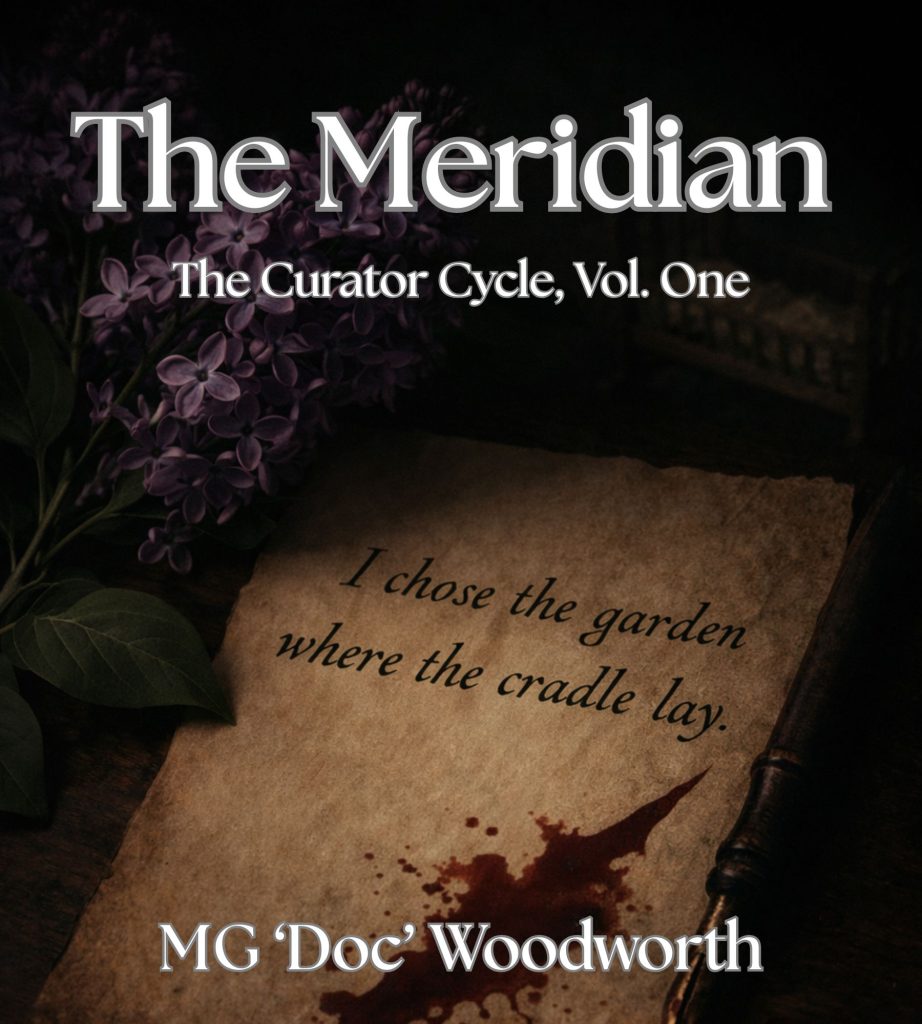
At sixteen, Silas Locke wrote a poem.
Forty-nine lines of formal verse — seven stanzas in rhyme royal, the form Chaucer invented for lamentation. Beautiful. Precise. A masterwork of grief written in a Virginia kitchen the week his mother died.
Then he spent twenty-six years performing it in human lives.
Each stanza maps to a person. Each person is a canvas. Each canvas is methodically destroyed — not through violence but through the careful dismantling of everything that makes a life a life. Employment. Marriage. Community. Trust. Faith. Voice. Self. Seven stanzas. Seven lives. One architecture of escalation that leaves no fingerprints, no evidence, nothing but the wreckage of people who appear to have simply fallen apart.
Retired FBI analyst Leland Bryce, working cold cases from his home in Fredericksburg, finds the pattern no one else could see. The cases are connected. The destruction is composed. Someone is writing human suffering in iambic pentameter.
The seventh canvas is a Portland archivist named Nora Arden. She doesn’t know her life is a poem. She doesn’t know the apartment was placed, the job was engineered, the relationships were composed. She doesn’t know that every ordinary thing about her ordinary life was designed by a man she has never met.
She is about to find out.
“And break, or bloom beyond what I intend.”
The poem’s last line offers two endings.
The question that drives the trilogy: which one does she choose?
For readers of Thomas Harris, Donna Tartt, and Tana French.
Literary psychological thriller.